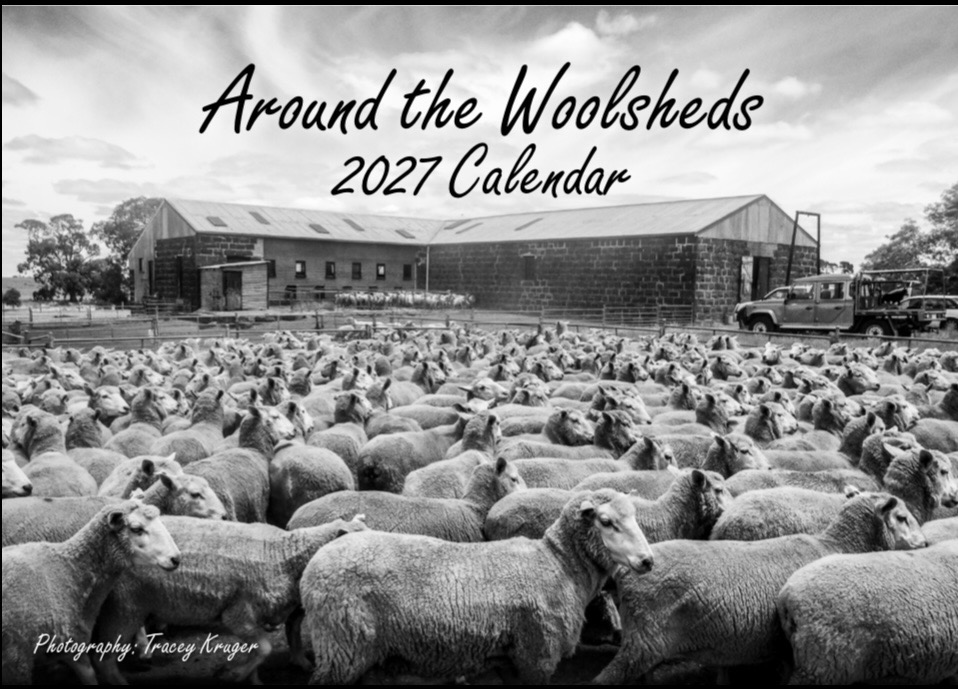
Richard Herps has been a generous supporter of the campaign to save Toganmain Woolshed. He recently sent us something rather special — an original poem inspired by the shed itself — and has kindly given us permission to share it here.
Richard first learned of Toganmain through an ABC video made not long after repairs on the Woolshed began, watching with the same disbelief many of us felt at the scale of the task ahead. Since retiring, he has taken up writing poetry — earlier this year winning the Novice Written category at the Victorian Bush Poetry Championships — and he decided to turn his attention to the old shed that had stayed with him. This is what he wrote.
The Toganmain Woolshed
South of the Murrumbidgee on Hay’s flat and treeless plain,
Where skies spread endlessly across its featureless terrain,
Within the southern Riverina, east of Carathool,
The pioneers built Toganmain to be their southern jewel.
A Station of three hundred thousand acres in extent,
With thirteen miles of riverfront where paddle steamers went:
They brought supplies and took the woolclip someway south to rail,
And thence to ports for England as a cargo under sail.
Her shed had eighty yards of length and was a third as wide,
And looked to be an upturned boat when viewed from the inside:
Her skeleton of timber vaults was structured and concise,
With mortise joints and tennons cut with measurements precise;
Her intricate geometry was neat and fashioned well,
And cast upon observing eyes a mesmerising spell.
A monolithic structure with no obvious divides,
She’s clad in crinkled sheets of iron on her roof and sides.
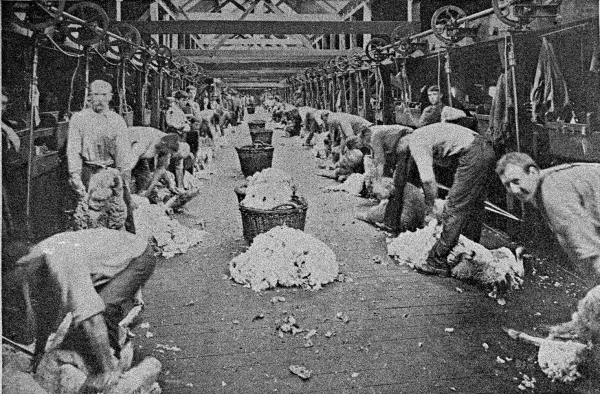
Her central hall had shearing stands more than a hundred strong
Where blades would click and cut the fleece, then move the sheep along.
Some other buildings sprawled beside this lengthy shed as well,
Including stores and other usages and rooms to dwell:
A kitchen, huge, detached and beating seven days a week,
With shearer’s quarters spartan, rudimentary and meek.
All hummed with great activity some nine months of the year,
Unless a drought caused pasture land to all but disappear.
A working man’s great hall of honest industry and toil,
Which harvested the sheep’s back, not the produce of the soil;
This wool shed was a testament to energy and grit,
And sheer determination to succeed and never quit.
Great flocks of sheep in holding yards, then forced through pens and chutes,
Then dragged upon the shearing floor between the shearer’s boots;
The click and scrape of metal blades on more than ninety sheep,
Their fleeces shorn then on the boards discarded in a heap;
Then rouseabouts with nimble hands and ever searching eyes
Removed them to the classers who then spread them out lengthwise.
The classers sorted wool by judging quality and line,
Then pressed them into bales for marking with the station’s sign.
A boy applying tar to injured sheep the shearer’s cut,
Then dinner’s bell aclanging from the outhouse kitchen hut.
A ploughman’s lunch of sprouts and lamb, some gravy, spuds and peas
To energise their failing strength and rest their back and knees.
The scouring of contaminants like lanolin and dirt,
Some bandaged workers here and there from accident or hurt;
Great noise and clatter, constant din and sometimes mild uproar
With labourers in frantic movement on the shearing floor
Sees competition mounting which the foreman can’t ignore,
And bellows out much discontent with his full-throated roar.
Exhaustion at the end of day bid farewell with a beer,
Then yarns and anecdotes all told with gusto and good cheer,
Some boasting on the number shorn throughout the length of day,
And how backache and shoulder pain were likely here to stay;
Comparisons with other shearing sheds and personnel,
And what of all their goings on they thought they ought to tell;
A welcome chance to roll a smoke and chill out in a chair,
With chants of the Wiradgiri and saltbush in the air;
The uncontested beauty of a cloudless southern sky,
And thoughts of season’s end and awkward partings with goodbye.
Yet what was once could not, forever, prosper and succeed,
When much was under challenge, changing, queried nor agreed.
The press and thrust of world events and oft confusing times,
And loyalties afflicted with some changing paradigms;
Deployment in Vietnam, demonstrations in the street,
With all the consequences of eventual defeat,
Made changing fashions and consumers want a greater choice,
Which gave some manufacturers a clear and constant voice:
Linen, hemp, synthetics, nylon, changing fashion styles,
With supermarkets selling clothing items in their aisles;
And then there were the issues and disputes with management
On wages, labour, costs and who must give way and relent.
The width of combs and automation brought the unions in,
And stirred up arguments about when boycotts should begin;
All which in isolation and in combination meant
That people’s appetite for wool was in some quarters spent.
The wool shed sits abandoned now, her classing hands passed on,
No cooks or rouseabouts to see, her shearers packed and gone;
Her ridge pole undulating like a curved and ageing spine,
Once barely seen but now no longer hidden or benign;
Some corrugated sheeting has gone missing without leave,
Like wounds unbandaged that the eyes beholding disbelieve;
Here weather makes her entry through what’s open and exposed,
And does so there relentlessly until the gap is closed.
Some white ants, rot and sagging beams throughout the structure’s length,
With uprights cracked and leaning drunkenly and lacking strength;
Its floor an undulating and uneven timber sea,
Whilst piering gaps between some bearers leaves them floating free,
With heaps of blow grass dunes the wind has swept in from the plain,
Unable to find exit or its former life regain.
Now frail, endangered and exposed, just one windstorm away
From immanent collapse brought on by disuse and decay.
With thanks to Richard Herps.