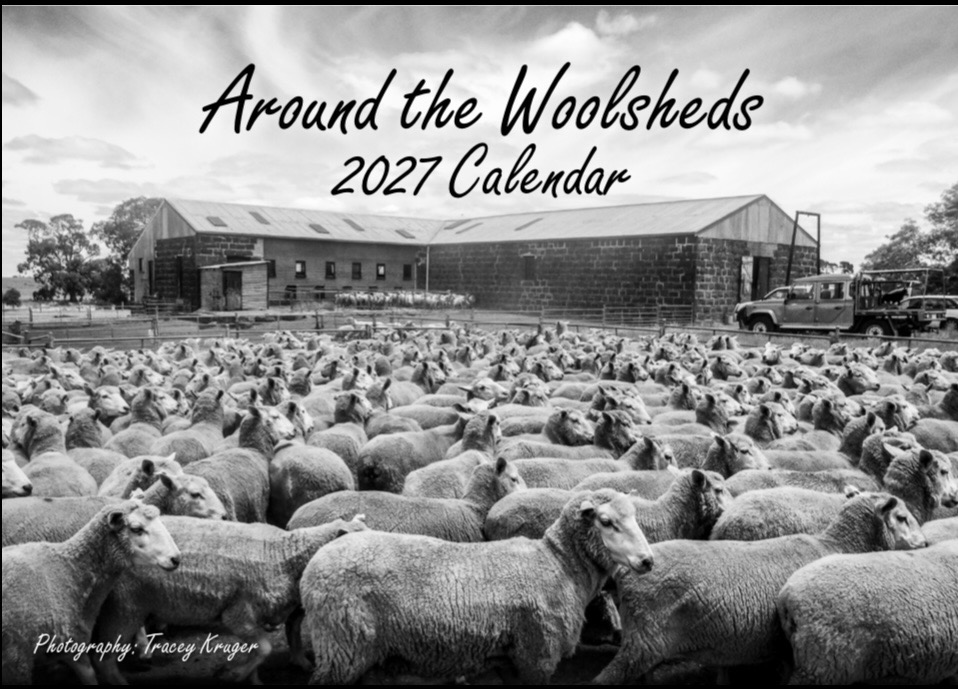
As we prepare to gather at the historic Toganmain Woolshed on 12th September 2026 for Cocktails in the Yard, we look back almost 137 years to a strikingly similar celebration. On Saturday, 31st August 1889, station owner Thomas Robertson hosted a grand festive entertainment inside the woolshed to mark the shearing season, drawing station hands, shearers, and regional guests for an unforgettable evening of music, theatre, and hospitality. Read the full account as originally published in The Riverine Grazier on September 6, 1889.

ENTERTAINMENT AT TOGANMAIN.
Having received a kind invitation from Mr Thomas Robertson for an entertainment to be held in the woolshed at Toganmain on Saturday, 31st of August, we started at about 5.30 p.m. from here, a party of seven, ranging from ten summers to thirty. As the road was about six inches under water, we had barely time to arrive at the river bank, opposite Toganmain station, before darkness set in; but by the occasional applications on a cornet carried by one of the party and many shakes, we drew up to the sound of the “hall,” and were in detachments taken across in the boat, kindly sent over to meet us. After being most hospitably received by our genial host and hostess and family, we were shown to our various rooms, where we adorned ourselves for the coming festivities. After being driven up by Mr Robertson in different vehicles, which were all loaded with valuable cargoes, we arrived at the woolshed. On entering, much to our amazement and admiration, we found the shed transformed into a fairy bower. A well-arranged stage had been erected, with flags drooping on either side of it, and a pretty curtain supported beneath by the “red ensign.” The auditorium was a very pretty picture. In the background the wool-press, enthroned in evergreens, reminded one of a large nest, and hanging from this to the beams of the roof were festoons of colored paper, and hanging from them were many Chinese lanterns, which, with the evergreens and wild clematis, twining round every available post and pillar, lent a soft and very pleasing effect to the whole scene. Sufficient praise cannot be given to those who planned and carried this out. This comfortable scene was made perfect by seeing all round the eager faces of some 150 or 200 shearers and station hands, who had been looking forward to this for some days past. At 8 o'clock Mr and Mrs Robertson arrived, taking their places on chairs reserved for themselves and their numerous guests. Behind these, seats and forms were placed for Mr Gowan and the other heads of the station; the rest of the audience finding comfortable places on the raised floor of the shed, whilst others preferred the press, where, their smiling faces showed out in softened light against the evergreens. Mr Grierson, jun., now announced the first item on the programme, which was an overture, very ably played by Mrs Robertson. The curtain then drew up and we had before us a very prettily draped stage, on which 9 performers (the ladies being very charmingly attired in white dresses, with cardinal sashes, etc.) were placed in a semicircle. This item of the programme, the “Toy Symphony,” was much appreciated, and a portion of it was played over again, at repeated calls and whistles for it from the audience. The following is a programme of the evening's entertainment. Mr Wilson delivered his song “Sailing” in a very able manner, and was very creditably followed by Mr W. Green in his recitation “Charge of the Light Brigade.” Miss Howden played with great spirit in her piano solo, “Mazeppa Galop.” Miss Ottilie Linden then appeared in a very taking costume of a Scotch fishwife, and sang her ever welcome song “Caller Herrin'” in an admirable manner, and made a great hit. Then we were treated to an Irish jig by Mr W. Lampe, who shone forth in proper costume. Mr Robertson then told us that Mr Leitch, the next performer, had been, and was then suffering from a severe cold and indisposition, but would gladly do his best to sing us a song, and this song we all thoroughly enjoyed, as notwithstanding Mr Leitch was very hoarse, he regularly brought down the house in his perfect rendering of the “Good young man who died,” in suitable costume of deep mourning. The pianoforte trio was then played by Miss Jessie Howden, Miss Ottilie Linden, and Miss Annie Robertson, and was listened to with great pleasure, and perhaps, here I may say, that an encore was insisted on to nearly every item on the programme, which was doubtless well deserved. The “Rolling stone gathers no moss,” was nicely given by eight voices, this terminating the first half of the programme. The curtain drew next for a scene in “Human Nature,” Mr Leitch being inimitable in his representation of Horatio Spofkins, and drew forth shouts of laughter at his witty sayings, one being “Call me Spoffy, nice, dear.” He was admirably supported by Miss Linden, as Maggie Wilkins, and Mr Grierson as Hawker. The whole piece showed great power in production and execution, being under Mr Leitch's guidance. “Barney O'Hea” was sweetly acted and sung by Miss J. Howden in real Irish peasant costume. The duet “True Love” was exceedingly well played by Misses Annie and Gracie Robertson and was followed by Miss Linden in “Home Sweet Home.” A pleasant surprise now awaited us in a recitation given by Mr W. Milne, who gave by special request the soul stirring and realistic piece “The Progress of Madness,” and as an encore “The Curfew must not toll to-night.” Little need be said in praise of Mr Milne's powers of recitation as he is well known in the district, and also in Sydney. Mr Goddard's step dance was well received, as it deserved to be, and carried us on to the event of the evening. Miss Gracie Robertson then rendering “I long to be single again,” her warning to young men being most amusing and cleverly done. This, together with the drama, was well worth going many miles to hear and see. Mrs Robertson then played a solo on the piano, showing how thoroughly well she can interpret Scotch and Irish music, being chiefly dances, jigs, reels, &c. An extremely pretty picture it was when the curtain went up again for the last item on the charming programme. This was called a “Country Dance,” with all the performers who had taken part in the evening's amusement joining in, save with the exception of Mr Leitch, who had unfortunately to leave, being too unwell to appear again. The ladies were in winsome costumes, representative of harvest or “May Day,” with garlands of brilliant field flowers which were set off by the “yokels” in knee breeches and grey hats, turned up and tied with gay ribbons, and all having Merripoles. The intricate movements in the dance must have required great patience and perseverance, each movement being vociferously applauded. After several encores, the evening's entertainment terminated with “God Save the Queen,” after which a struggle for who should give three cheers for Mr Robertson and his family followed, which cheers by the heartiness expressed in them, showed how thoroughly everyone had enjoyed the evening. Other cheers were given for Mr Gowans, and one of the men rose up and spoke in eloquent terms, thanking Mr Robertson for his unflagging kindness, and called for three more cheers. Mr Robertson having expressed in a few well chosen words his pleasure at seeing so many present, hoped that they would work shoulder to shoulder as in times gone by, and hoped that this shearing would end as former ones had done in mutual good feelings, and with one assent the men all said “we hope so.” After singing “He's a jolly good fellow” every one dispersed, with the exception of one trap, which remained stuck in the mud for about half an hour, which necessitated the fair ones having almost to swim to the house and losing thereby their goloshes. Nothing of a disastrous character occurred except the loss of many hearts. Mr and Mrs Robertson kindly entertained us till the following afternoon, when we started on our homeward journey, with the pleasant experience of having been entertained in a truly Australian manner.