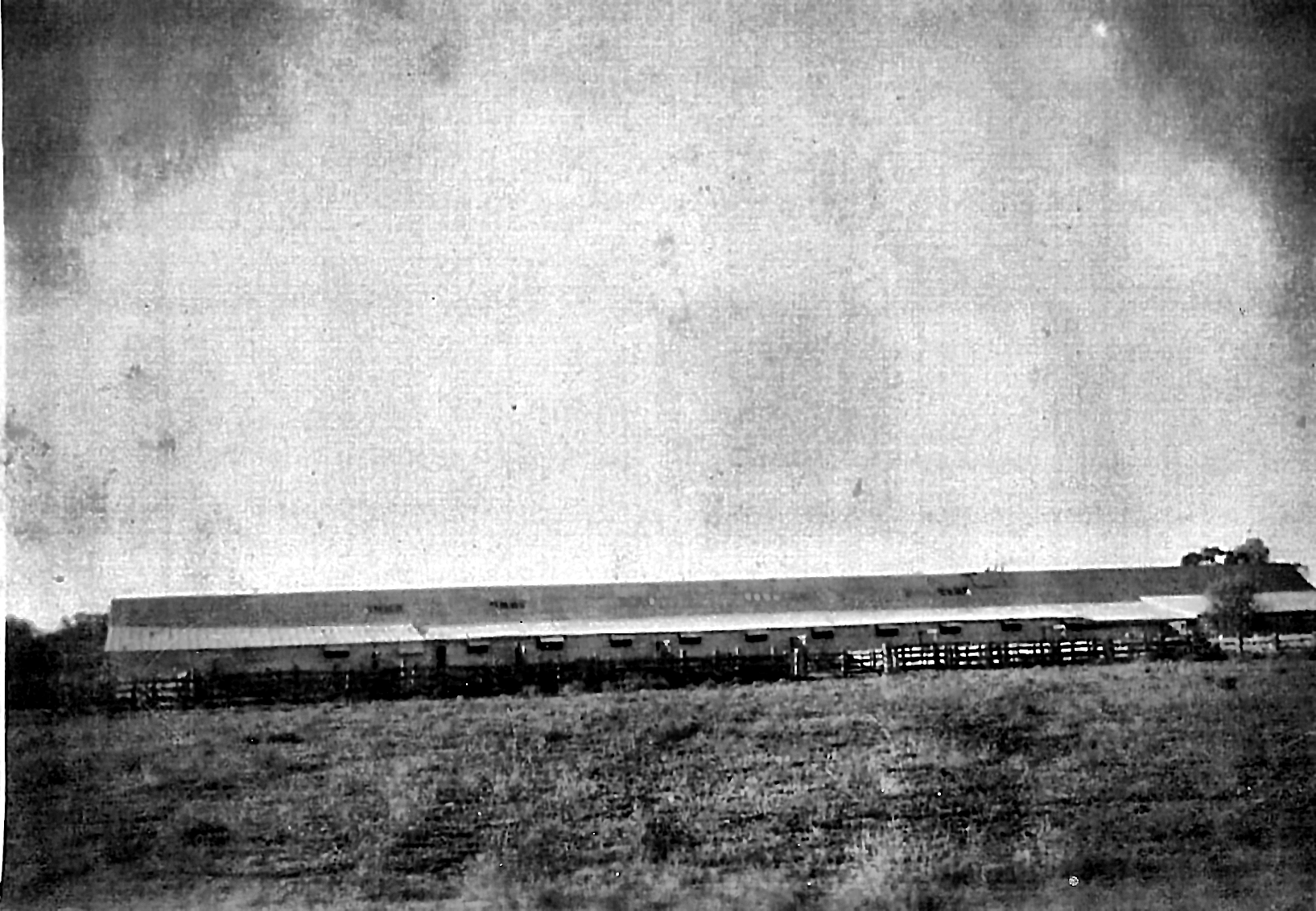
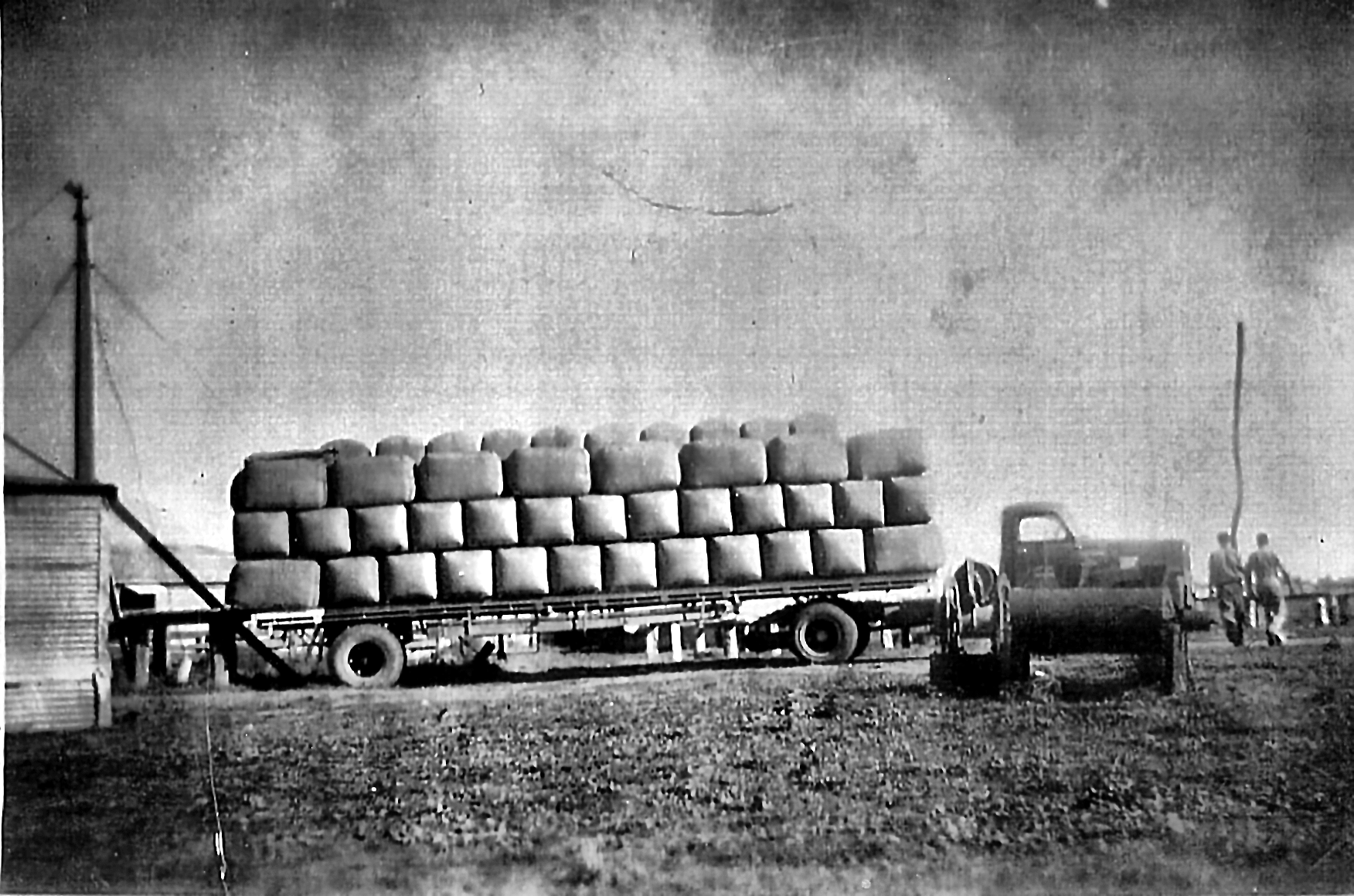
A small set of photographs taken on a Box Brownie in July 1955 — the pressed bales, the long iron-roofed shed against a pale winter sky, a sixteen-year-old's first look at a working woolshed. Jan Smith sent them to us recently. They were taken by her late husband Arthur, who got his start that winter at Toganmain.
The path to Toganmain
Arthur had no family connection to the trade. He set his mind on wool regardless, and on finishing his course at Hurstville Technical College he took up with the Farmers and Graziers Co-operative, who sent him out to Toganmain for the 1955 winter shearing. He was sixteen years old. Toganmain was the first shed he ever worked.
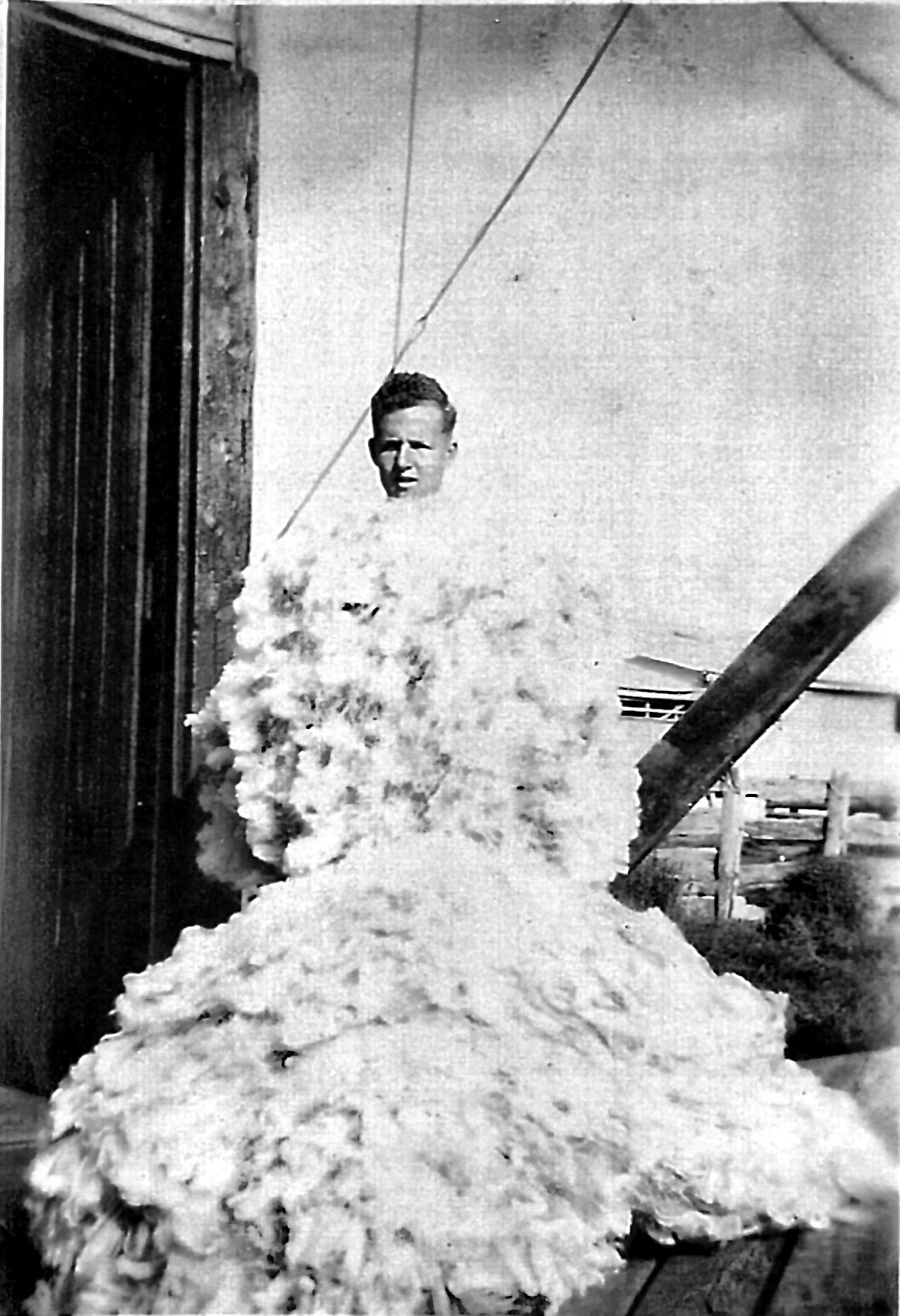
The photographs
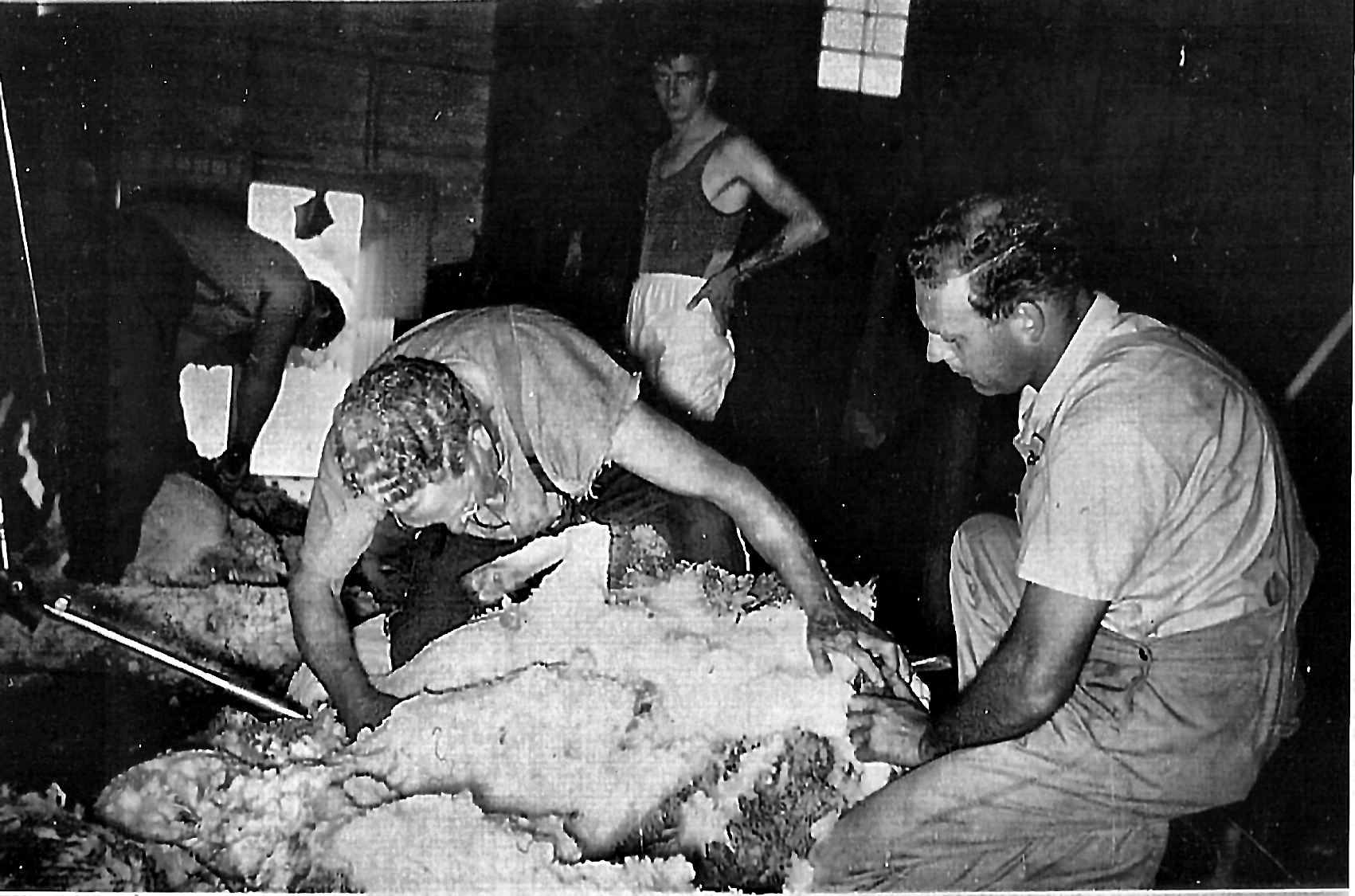
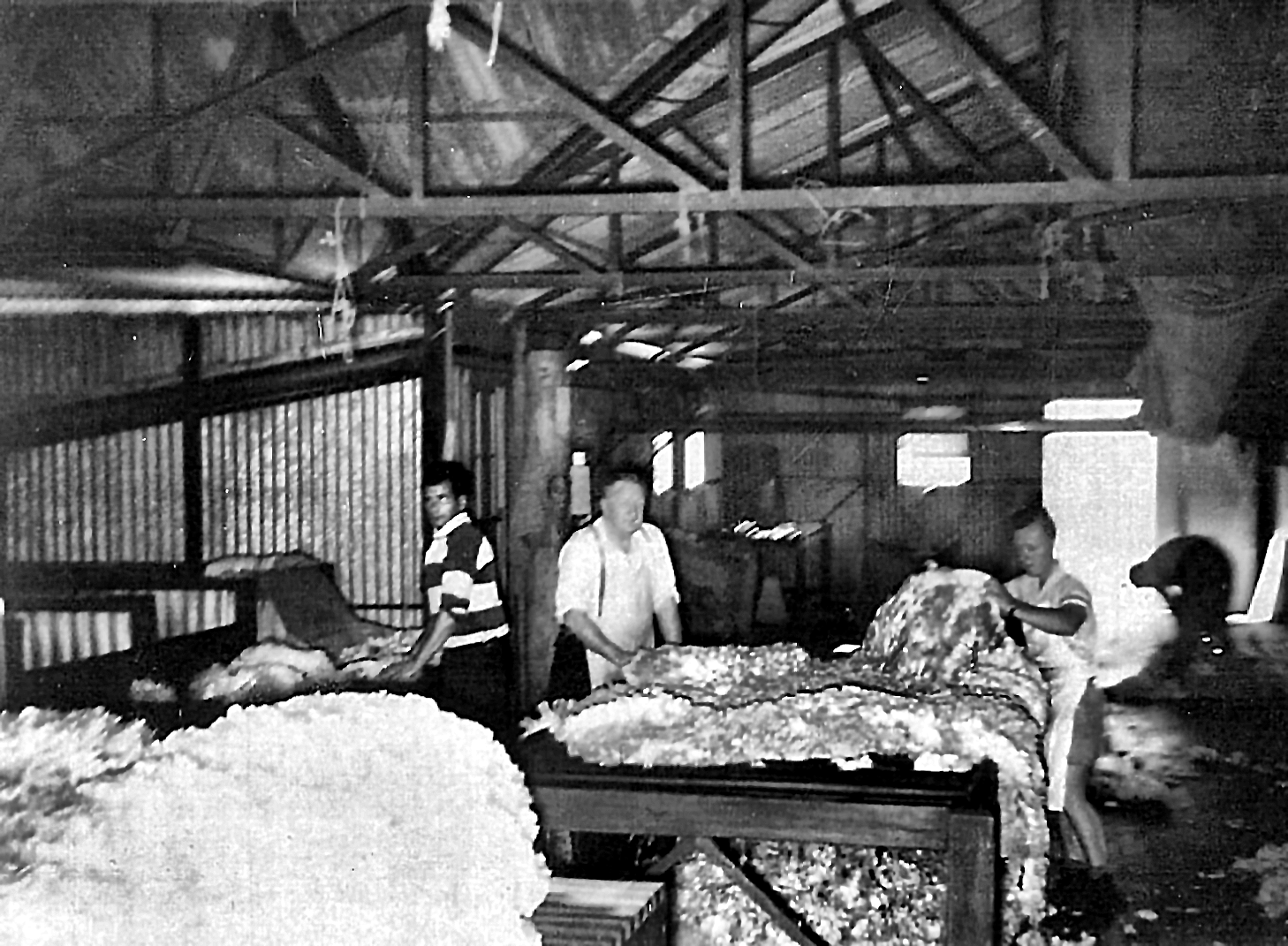
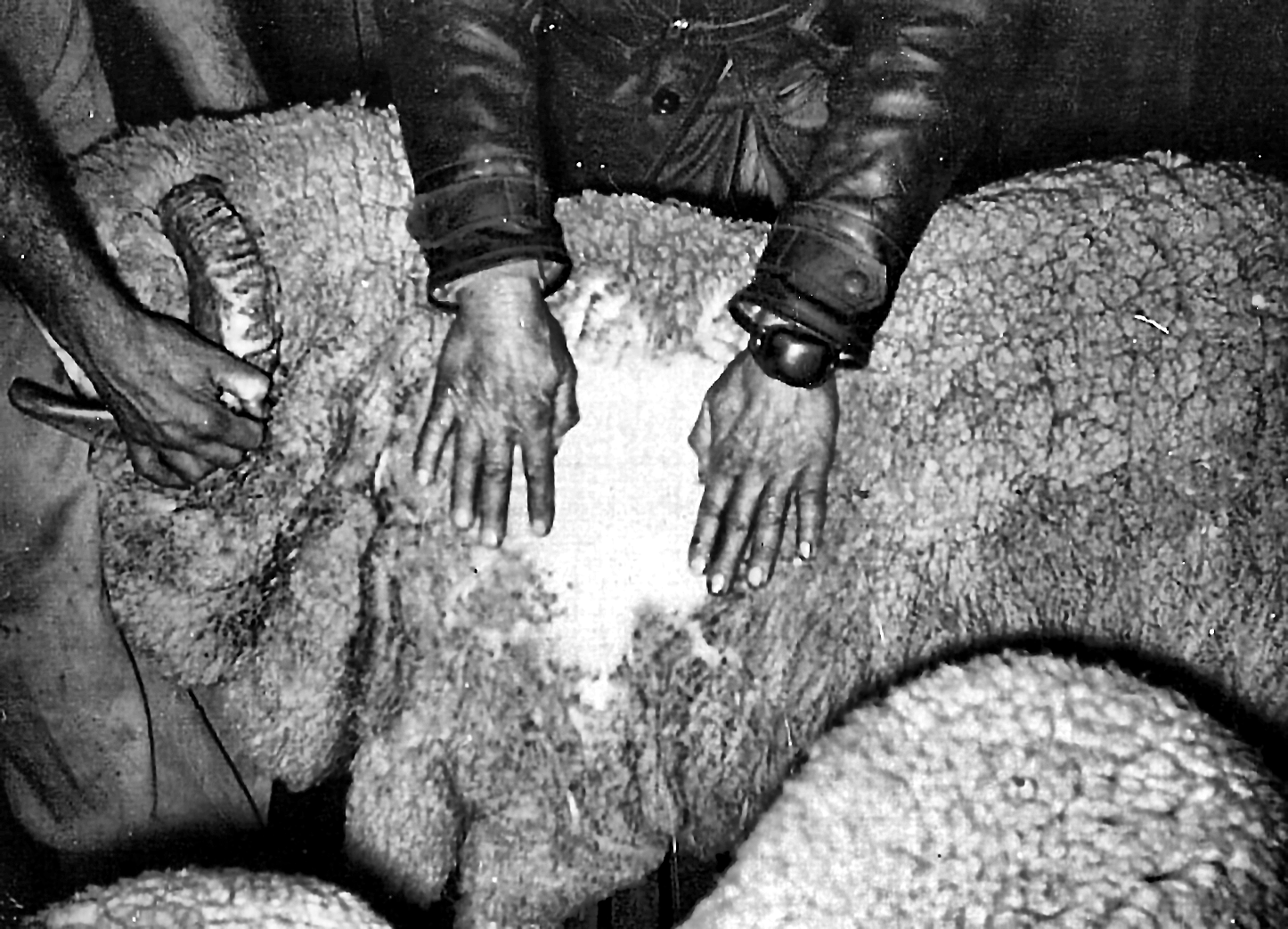
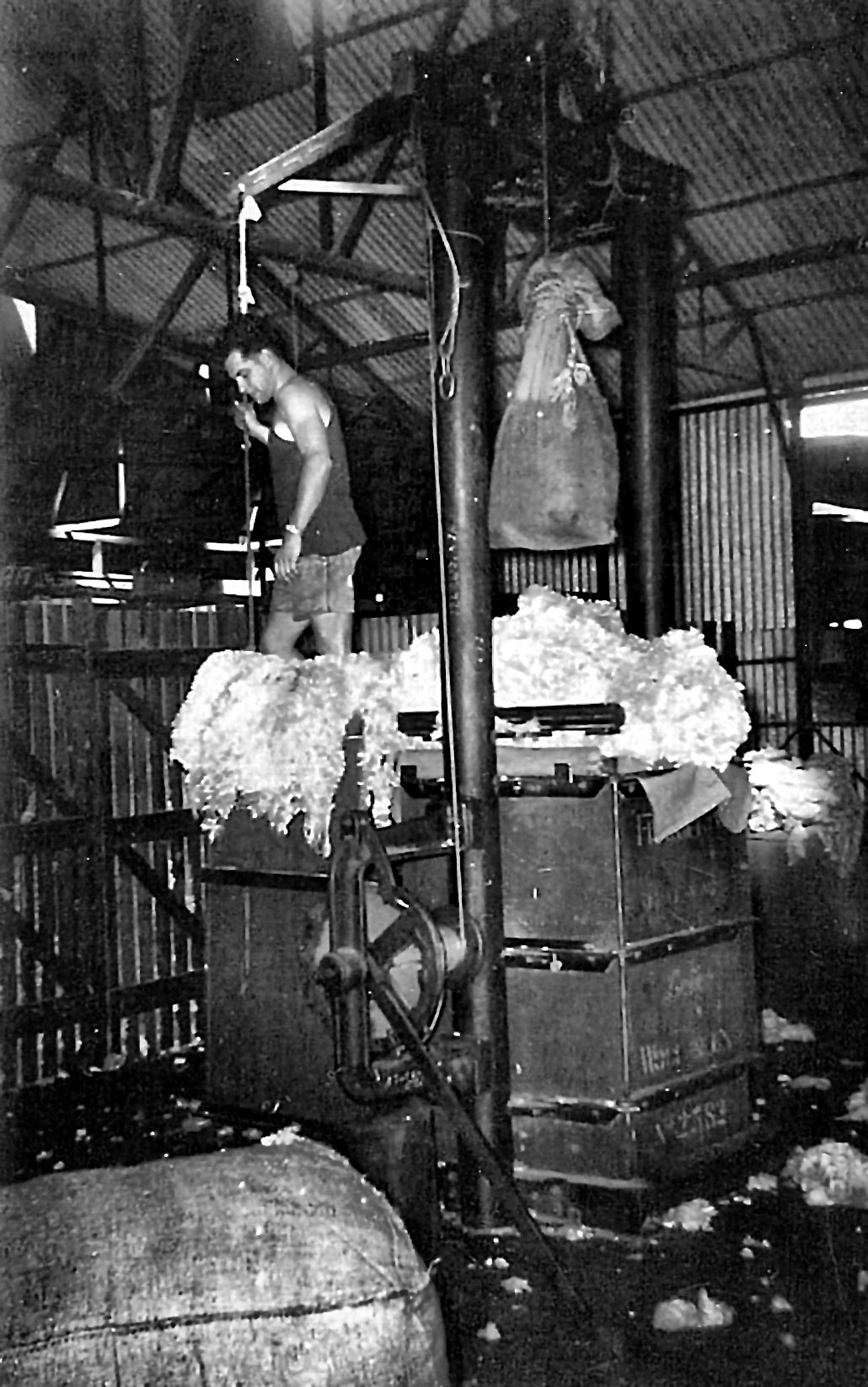
The prints are all of that one shed and its work. The long iron-roofed shed stretched against the winter sky. Shearers at work on the board. Inside: men at the classing table, hands deep in fleeces, the light from the open end of the shed falling across the floor; two sets of hands working a fleece at the skirting table; the wool press itself, cast-iron and weighted, door half-closed, a man standing at the lever. Outside again: a truck nosed in to the loading bay, its flat-bed stacked row upon row with pressed bales ready to go. And a character shot — a man buried to his neck in an extraordinary heap of loose wool, only his head visible above the pile.
7 photos — click any image to browse full gallery
Arthur in the pictures
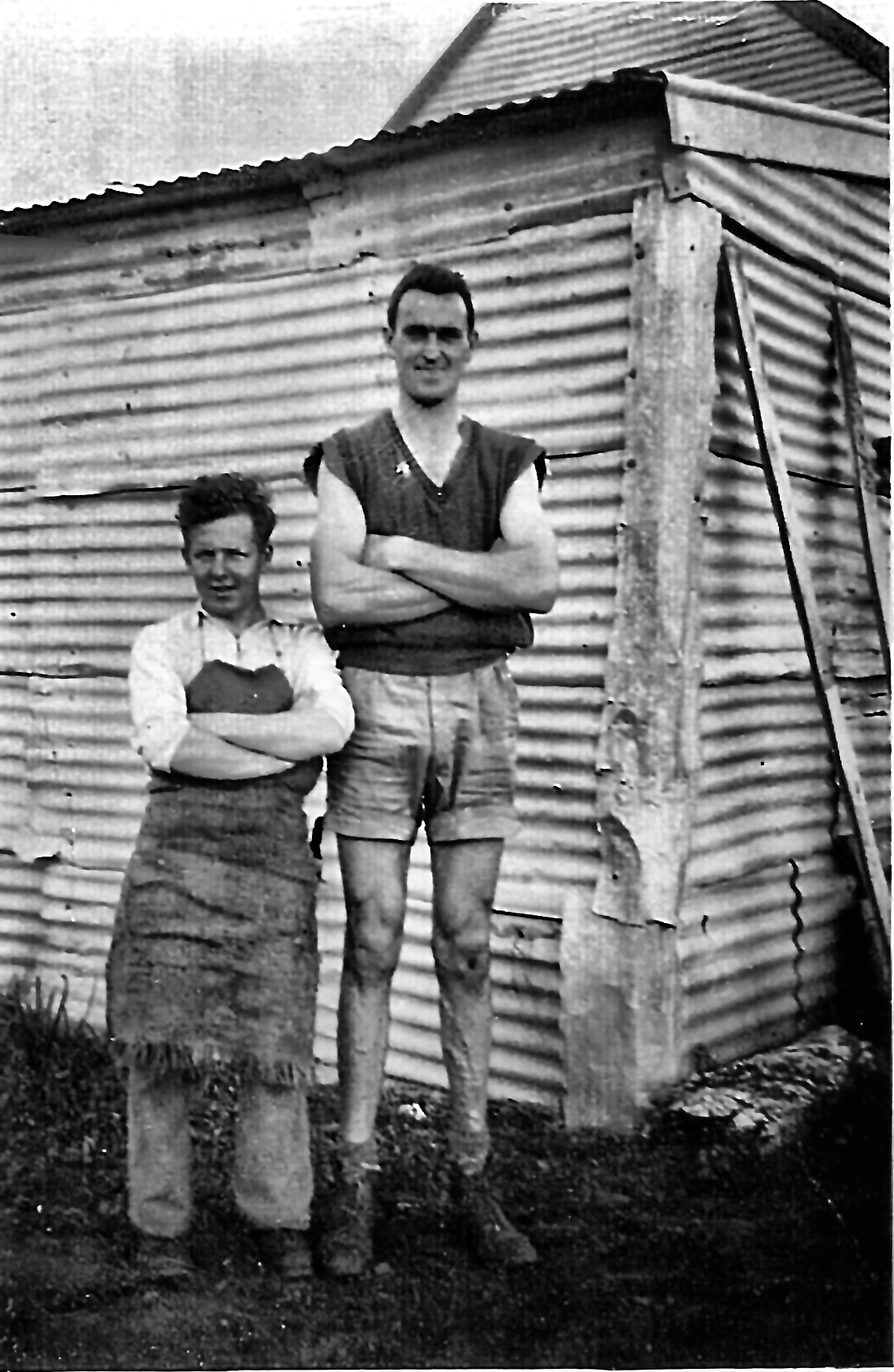
Arthur is in more than one of the shots. In the shed-interior picture he is the young man on the right — dark-haired, in a short-sleeved shirt and bib-and-brace overalls, the shorter of the men at the classing table. He is the head rising out of the wool pile in the character shot. And he is the small figure on the left in the portrait at the top of this page, standing outside a small corrugated-iron shed beside a very tall companion: apron over a white shirt, hands folded in front of him, still recognisably a boy next to the older man in shorts and a sleeveless top. The height difference tells its own story about how young he was when he walked into his first shed.
After Toganmain
Arthur didn't return to Toganmain to work. The trade sent him further on — north to Walgett, south to Queanbeyan, and around a handful of other sheds in the district - but Toganmain, being his first, stayed with him. He spoke of it in later years.
He met Jan at a cousin's wedding. Not long afterwards they were married themselves, and the drive back from a classing trip to Walgett - through the black mud of an inland road after heavy rain - got Arthur home to Sydney only the night before his own wedding. They made their home at Engadine in Sydney's south and raised two daughters.
Sometime in the early 1980s, when the girls were young teenagers, Arthur packed Jan and the daughters into the car and took them on a camping trip. Naturally this included a visit to Toganmain to show them where he had started. It was the only time any of them went back.
The end of the wool years
Arthur stayed with Farmers and Graziers, classing wool, for many years. When the firm eventually moved its operations from the city out to the western suburbs, the drive from Engadine became too much, and by then he had, as Jan puts it, had enough. The family relocated to Nambucca, where Arthur bought a cab and turned to driving; later he drove buses in the same district. He saw out his working life in a variety of other jobs, and he and Jan eventually retired on the New South Wales Central Coast.
Nothing else of his classing days survived. No stencil, no classer's book, no certificates, no other photographs from the sheds. What's left is this small set of prints from Arthur's Box Brownie — a sixteen-year-old's first look at a working woolshed, now seventy years old, and one of the few windows we still have onto Toganmain at mid-century.
With thanks to Jan Smith.