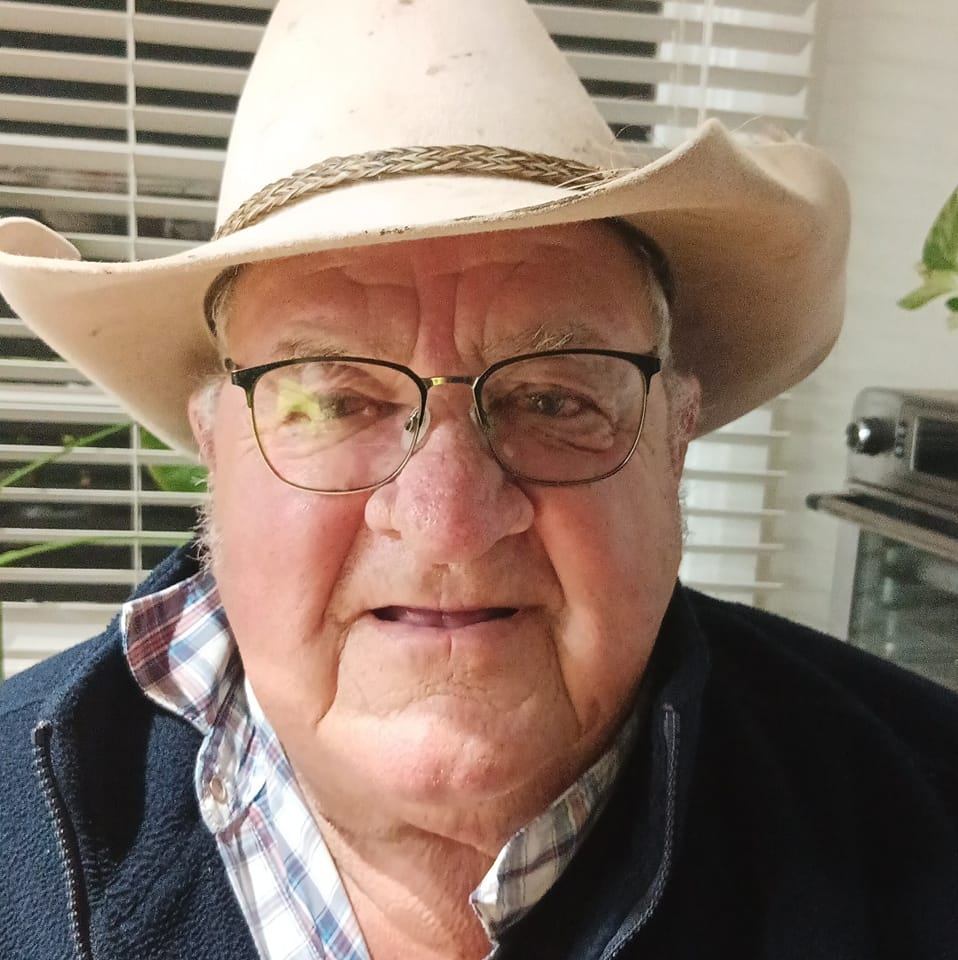
There's a particular kind of knowledge that only comes from a life lived outdoors - from years of reading country, moving mobs across vast distances, and knowing your animals the way most people know their neighbours. Frank Lees has that knowledge in spades, and recently he shared some of it with us before heading home to Queensland.
Frank grew up in Cunnamulla in outback Queensland, but it was the pastoral country of the Riverina that would shape much of his working life. He first came south in the mid-1970s - around 1976 or 1977 - to work for Don Armstrong, one of the region's significant pastoral operators of the era.
Working for Don Armstrong
Frank's initial role was looking after Cooinbil, one of Armstrong's properties, but he soon became one of Don's most trusted drovers. That working relationship would last around fifteen years.
Don Armstrong was a man of scale. At Cooinbil he ran a twenty-stand shearing shed, putting twenty shearers on. He did the same at Toganmain. But as Frank recalls with a drover's dry pragmatism, running two big sheds simultaneously created its own headaches:
"It was too good for just two blokes trying to keep the sheep out for him, take them away and bring them back."
Frank's job was to make that work - mustering Armstrong's sheep, droving them in for shearing at Toganmain or Cooinbil, waiting out the shed, then moving them back to the paddock. A rhythm of work that followed the seasons and the wool.
For all his years working alongside shearers at Toganmain and Cooinbil, Frank was never one of them. Ask him if he could shear and he'll tell you straight: he couldn't shear a magpie. It's the kind of line that gets a laugh, but it also says something about the man - he knew exactly what he was good at, and droving was it.
The Last Mob off the Train
One of Frank's most vivid memories is of the last time sheep arrived at the local railway yards by train - sometime in the early 1980s, as the long tradition of rail transport for livestock was coming to an end across rural Australia.
Frank was there to meet them. But those sheep didn't go to Toganmain - they were driven out to Carrego, near Carrathool, in what Frank indicates predated his work on Toganmain itself. It's a small detail that speaks to the scale of Armstrong's operation across the district, and to Frank's central role in keeping it all moving.
A Life on the Road
Frank kept meticulous records of his droving work - a journal logging every day on the road, every mob moved, every animal lost and why. It's exactly the kind of primary source that historians dream of, and we're hoping Frank might share more of it with us in time.
His droving wasn't limited to the Riverina. He walked mobs through Dubbo and beyond, and took a wagonette - complete with horses - as far as Queensland. It was a working life conducted largely before dawn:
"We'd leave the house at four o'clock in the morning."
When he was based at Toganmain, Frank lived in the quarters at the back of the homestead - a connection to the property that went well beyond the working day.
The End of an Era
Frank finished up his work for Don Armstrong sometime in the 1990s. Not long after, Armstrong sold the property and headed north. Frank stayed on in the district for a while, doing droving work for others around Carrathool, before eventually returning to Queensland himself.
Keeping the Record
Frank's connection to Toganmain is a thread in a much larger story - of droving, of wool, of the men and women who kept this country productive through sheer physical effort and hard-won knowledge. We're grateful he took the time to share it with us before heading home.